Welcoming New Smiles!



Healthy Smiles With Early Orthodontics
An orthodontic problem — also called a malocclusion, or "bad bite" — occurs when the upper and lower teeth don't come together properly. Malocclusions can affect the way your child chews, speaks, and smiles, and if left unaddressed, can lead to more complex dental and jaw issues over time.
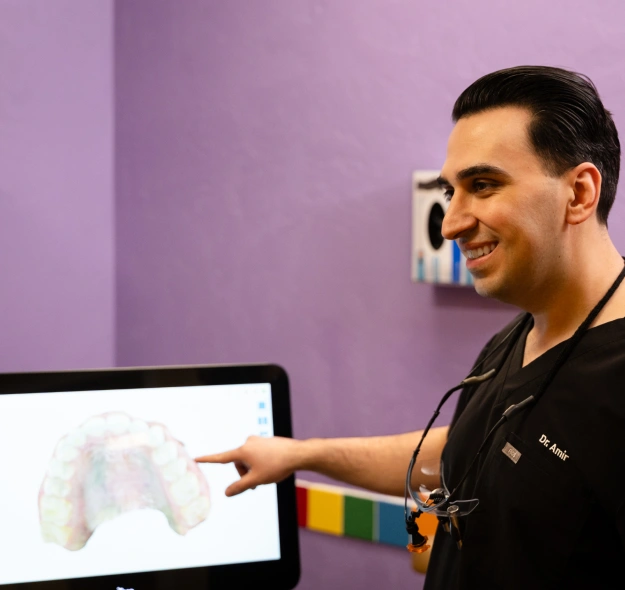
At The CrocDoc in El Paso, TX, we monitor your child's bite and jaw development at every routine visit. Catching orthodontic concerns early — often before all the permanent teeth have even come in — gives your child the best chance at a simpler, more effective path to a healthy, aligned smile.
Book Your Child's Appointment

What Causes Orthodontic Problems in Kids
Malocclusions can be inherited or develop over time due to a variety of factors.
- Genetics: Many bite and alignment issues run in families. If you or your partner had crowded teeth, an overbite, or jaw alignment issues, your child may be predisposed to similar concerns.
- Missing or Extra Teeth: A missing tooth — whether due to early loss, injury, or a tooth that never developed — can cause surrounding teeth to drift and shift, disrupting the alignment of the entire arch. Extra teeth can crowd the mouth and push other teeth out of position.
- Crowded Teeth: When there isn't enough space in the jaw for all the teeth to erupt properly, teeth overlap, rotate, or come in at irregular angles.
Jaw Misalignment: Sometimes the upper and lower jaws don't develop at the same rate or in proper proportion, resulting in an overbite, underbite, crossbite, or open bite. - Prolonged Habits: Extended thumb sucking, pacifier use, or tongue thrusting can place consistent pressure on the teeth and developing jaw, gradually shifting teeth and altering the shape of the bite over time.
- Accidents and Injury: Trauma to the face or jaw during early childhood can affect how teeth erupt and how the jaw develops. Dental emergencies such as a broken or knocked-out tooth, severe tooth pain, or other unexpected injuries should be treated promptly to help protect your child's oral health.
Why Early Detection Matters
The American Academy of Orthodontics recommends that children have their first orthodontic evaluation by age 7. At this stage, enough permanent teeth have come in for us to identify developing bite and alignment issues — while the jaw is still growing and far more responsive to guidance than it will be in adulthood.
Early detection doesn't always mean early treatment. In many cases, we simply monitor the situation and time treatment for when it will be most effective. But for some conditions — particularly those involving jaw development — intervening early can significantly reduce the complexity and duration of treatment later, and in some cases eliminate the need for more extensive intervention altogether.
At The CrocDoc, orthodontic screening is a standard part of every routine exam. We track your child's bite and jaw development over time and refer to a trusted orthodontic specialist when the time is right.
Signs Your Child May Have an Orthodontic Problem
Keep an eye out for the following between visits:
- Teeth that are visibly crowded, overlapping, or crooked
- Upper and lower teeth that don't meet evenly when biting
- Difficulty chewing or biting food comfortably
- Mouth breathing or difficulty closing the lips naturally
- Jaw shifting, clicking, or popping
- Speech difficulties such as a lisp
- Prolonged thumb sucking or pacifier use past age 4
- Baby teeth falling out very early or very late
- Teeth that appear to be erupting in unusual positions
Our Role in Your Child's Orthodontic Health
As a pediatric dental practice, our role is to monitor, identify, and guide — not to treat orthodontic issues directly. What we do is ensure that nothing goes unnoticed on our watch. By tracking your child's bite and development from their earliest visits, we build a complete picture of how their smile is taking shape and flag anything that warrants a closer look.
When orthodontic treatment is recommended, we'll refer your child to a qualified orthodontic specialist and share everything we know about their dental history to make that transition as smooth as possible. The best orthodontic outcomes almost always begin with a pediatric dentist who's been paying attention from the start. That's exactly what we do at The CrocDoc.
Call Us Today
Serving East El Paso, Socorro, Ysleta, Horizon City, Clint, San Elizario

Frequently Asked Questions
New Patients and Emergency Appointments Welcome